
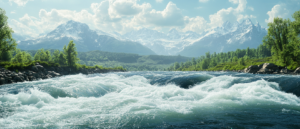
Colorado’s Class IV whitewater means paddles slapping, rafts lifting, and your helmet echoing with river roar. As of April 1, 2025, the statewide snow-water equivalent is 85 percent of the median after a storm-charged March, pointing to reliable flows through June and dam-boosted surges on the Arkansas into August. Outfitters like Echo Canyon River Expeditions turn that power into safe fun through veteran guides and proven swift-water protocols. Below, we’re ranking the five best Class IV runs in Colorado and explaining exactly why each one deserves its spot.
Why You Can Trust Our 2026 Ranking
Guided rafters punch through Class IV waves in Colorado’s Royal Gorge, a highlight of the state’s top runs.
We grade rivers the same way guides scout rapids: methodically. Each run earns a 1–5 score in five categories:
- Thrill-to-control ratio (class rating and rapid character)
- Scenery and sense of place
- Season length and flow reliability
- Travel logistics from major hubs
- Outfitter safety record
Because most Class IV paddlers chase big, photogenic water they can reliably book, we double-weight the first three categories.
Data come from public, verifiable sources:
- Class ratings → American Whitewater Colorado database
- Flow windows → 2025 NRCS snow-survey reports and Colorado Parks and Wildlife (CPW) release schedules
- Safety logs → 2022–2024 incident reports compiled by the Colorado River Outfitters Association and CPW bulletins
We rechecked every figure in March 2025, so snow boosts, permit updates, and new access trails are already baked into the math.
Numbers, not marketing budgets, determine placement. That objectivity lets Royal Gorge edge out The Numbers, while the spectacular but remote Upper Animas lands lower. Feel free to tweak the order if your own “fun formula” ranks scenery over logistics.
Colorado currently sets a statewide minimum of 50 hours of certified guide training.
Echo Canyon Rafting Experience reports that its guides complete roughly 200 to 250 hours of preseason training and require advanced wilderness medical certifications before leading Royal Gorge trips, and we treat that kind of above-minimum standard as a real edge in the “outfitter safety record” score.
1. Royal Gorge, Arkansas River: Colorado’s Signature Class IV Thrill
Slide into a 1,000-foot-deep granite hallway where sunlight knifes down to booming waves and brief, forgiving pools. At typical summer releases of 700–2,500 cubic feet per second, the gorge stays firmly in Class IV, though early-June snowmelt can push Sunshine Falls toward IV+.
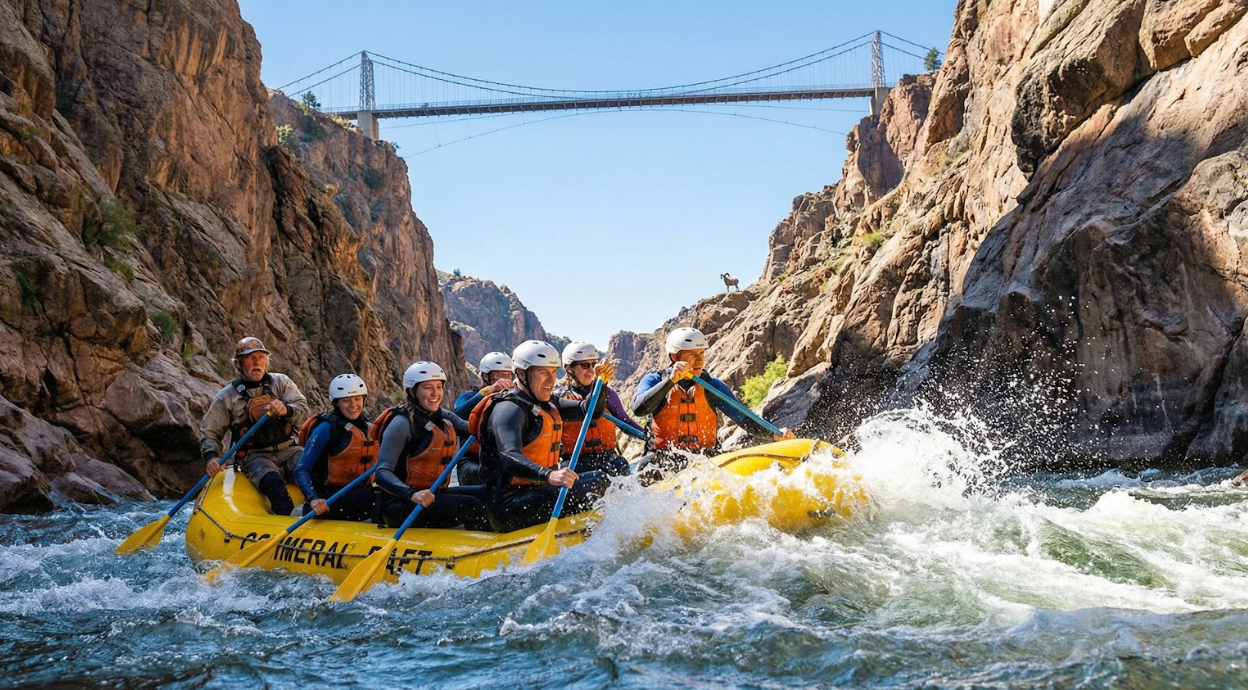
Royal Gorge delivers deep canyon walls, big wave trains, and guided thrills that make it Colorado’s signature Class IV run.
Why it tops the list:
- Difficulty with margin. Big wave trains and clean lines sharpen skills without the continuous chaos of Class V.
- Season length. The Voluntary Flow Management Program keeps the Arkansas near 700 cfs from July 1–August 15, extending prime rafting weeks after other rivers drop.
- Iconic setting. America’s highest suspension bridge hangs 956 feet overhead, and bighorn sheep scale sheer walls.
- Easy access. Cañon City sits two hours from Denver on paved highways, so you can run morning laps and still make lunch in town.
- Veteran guides. Echo Canyon River Expeditions, based at the rim, logs more Royal Gorge miles than any outfitter; its colorado white water rafting trips pair Type V PFDs with guides who drill high-side moves before the first rapid.
Name-drop rapids: Sunshine Falls, Sledgehammer, Wall Slammer.
Royal Gorge blends sustained adrenaline, jaw-dropping geology, a long managed season, and top-tier safety, earning its spot at number one.
2. The Numbers, Arkansas River: Relentless Class IV Hits
Sprint is the only speed here. From the Granite put-in, the river plunges through seven numbered rapids in roughly seven miles, dropping about 70 feet per mile and serving up nearly continuous Class IV whitewater.
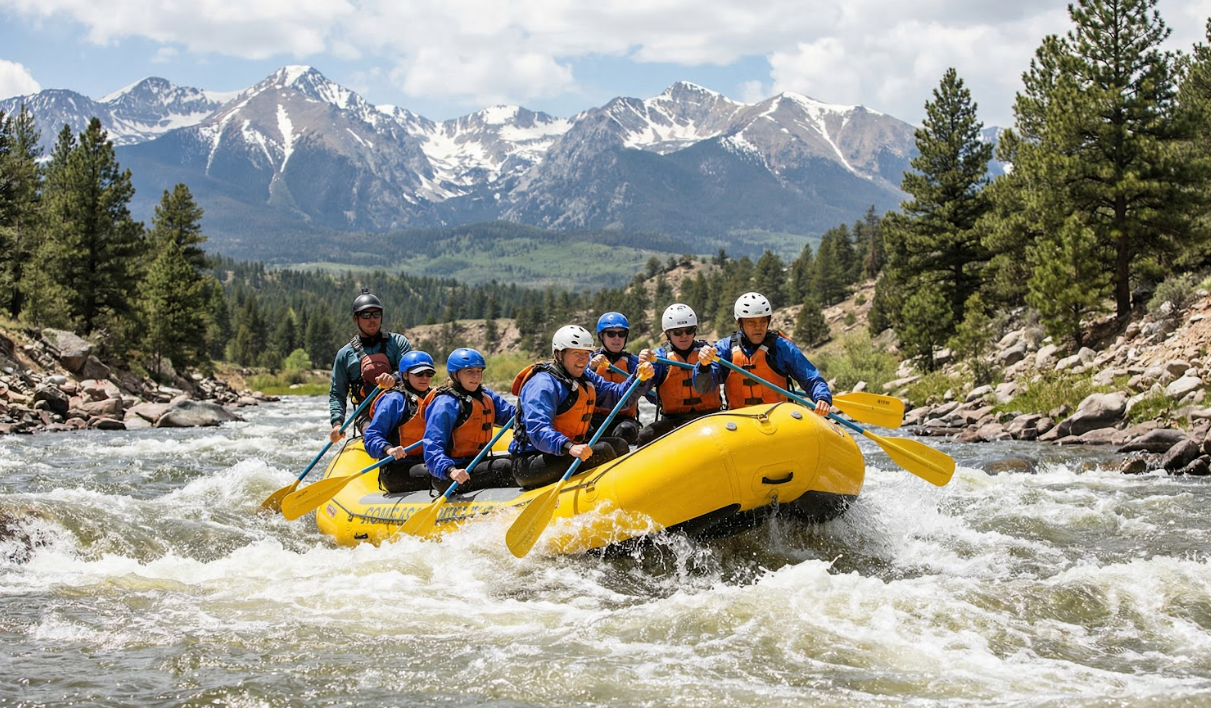
On The Numbers, seven stacked rapids and a Collegiate Peaks backdrop turn Class IV into a full-body sprint.
Why it ranks second:
- Pure intensity. Chest-high holes stack so quickly that guides call commands before paddles clear the spray.
- Alpine backdrop. The Collegiate Peaks (14,000-plus ft) frame every stroke, if you dare glance up.
- Snowmelt window. Prime flows run Memorial Day–late July; in strong snow years like 2025, VFMP releases on the Arkansas can keep 700 cfs or more at the Wellsville gauge through August 15.
- Quick access. The put-in sits 15 minutes north of Buena Vista and about 2 hours 30 minutes from Denver on US-285.
Rapid cheat sheet:
- Number 4 — tight right bend, hidden center boulder
- Number 5 — long, technical cascade that soaks every seat
- Number 6 — zig-zag finale into a rare flatwater breather
No bridges, no canyon theatrics, just five to seven miles of nonstop hydraulics that sharpen skills and stretch smiles. Bring fitness, grit, and a wetsuit; The Numbers rewards nothing less.
3. Upper Clear Creek: Front-Range Adrenaline in a Coffee-Break Window
Crave Class IV punch on a tight schedule? Point west on I-70 and, in under 45 minutes, Denver’s skyline flips to granite walls and frothy chutes. Upper Clear Creek loses about 110 feet per mile, so every horizon line demands a fresh paddle stroke.
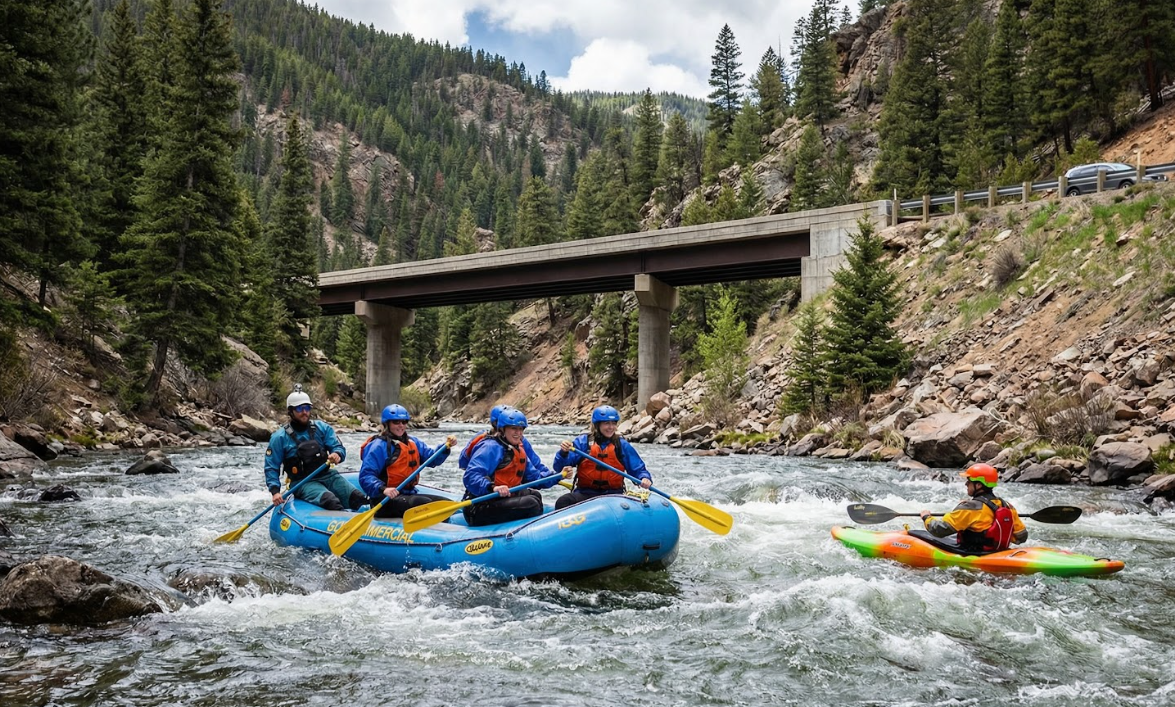
Upper Clear Creek packs front-range Class IV+ intensity into a quick-hit run just minutes off I‑70.
This is creek boating in a raft. Rapids like Phoenix and Outer Limits mix steep drops, offset holes, and snap-decision laterals. At early-June flows of 400–700 cfs the run hits Class IV+, while mid-July trickles turn it into a technical chess match.
Why it ranks third:
- Convenience: park-side put-in, two-hour round trip on water, four departures a day.
- Pure intensity: more adrenaline per minute than any Front-Range river.
- Safety focus: helmets required, and most outfitters run a swim test and add a safety kayaker when flows spike.
Quick-hit perks:
- Steep gradient keeps heart rates humming.
- Sub-hour drive from any Front-Range city.
- Cold June snowmelt guarantees a post-run grin and numb calves.
The trade-off? A short, early-summer window. When the creek drops, so does the ranking, but for five or six peak weeks, Upper Clear Creek fires on all cylinders just a stone’s throw from DIA.
4. Upper Animas River: a Two-Day Wilderness Epic at Ten Thousand Feet
Commitment starts before the first paddle stroke. You ride the Durango & Silverton Narrow Gauge Railroad from Silverton to Needleton, step off at 9,200 feet, and inflate rafts beside snow-striped fourteeners. Over the next 24 miles and two long days, there’s no road, no cell service, and no shortcut home.
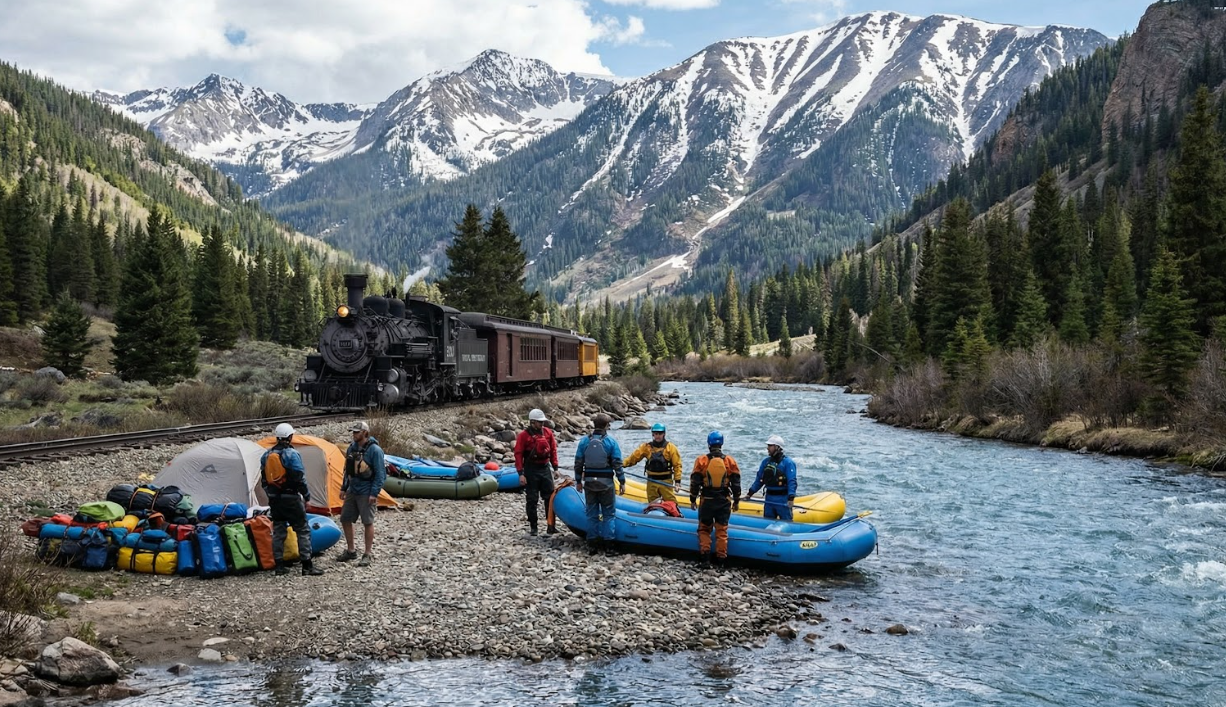
On the Upper Animas, your wilderness classroom starts the moment you step off the train at a roadless riverside put-in.
Why it ranks fourth:
- Continuous Class IV with Class V spikes. Rapids such as No Name and Broken Bridge often need a scout or portage when flows top 3,000 cfs at the Silverton gauge.
- Alpine immersion. Cold, glacial water and 10,000-plus-foot elevation turn every swim into a gasp drill and every vista into a postcard.
- Expedition logistics. Two- to three-day itineraries include riverside campouts under dark-sky stars, and all gear arrives by historic train.
- Short, fickle season. High snow keeps the Upper Animas runnable from late May to mid-July; most outfitters pause trips when flows fall below 800 cfs or spike above safe thresholds.
- Skill bar. Companies require prior Class IV experience, confident swimming, and a mandatory in-water test before launch. A safety kayaker shadows each raft.
The payoff? Elk in high meadows, cedar-lined gorges, and rapids that test technique as much as endurance. For paddlers who crave a Grand Canyon–style commitment without the permit lottery, the Upper Animas is Colorado’s ultimate wilderness classroom.
5. Gore Canyon, Colorado River: The Final Boss of Commercial Rafting
Guides whisper about this one around the campfire. Just upstream of Kremmling, the Colorado River knifes through a granite slot, dropping into Class V rapids like Gore Rapid, Tunnel Falls, and Kirshbaum. Commercial trips launch only when late-summer releases settle between roughly 900 and 1,200 cfs at the Colorado-near-Kremmling gauge, the narrow window that turns “impossible” into merely “expert.”
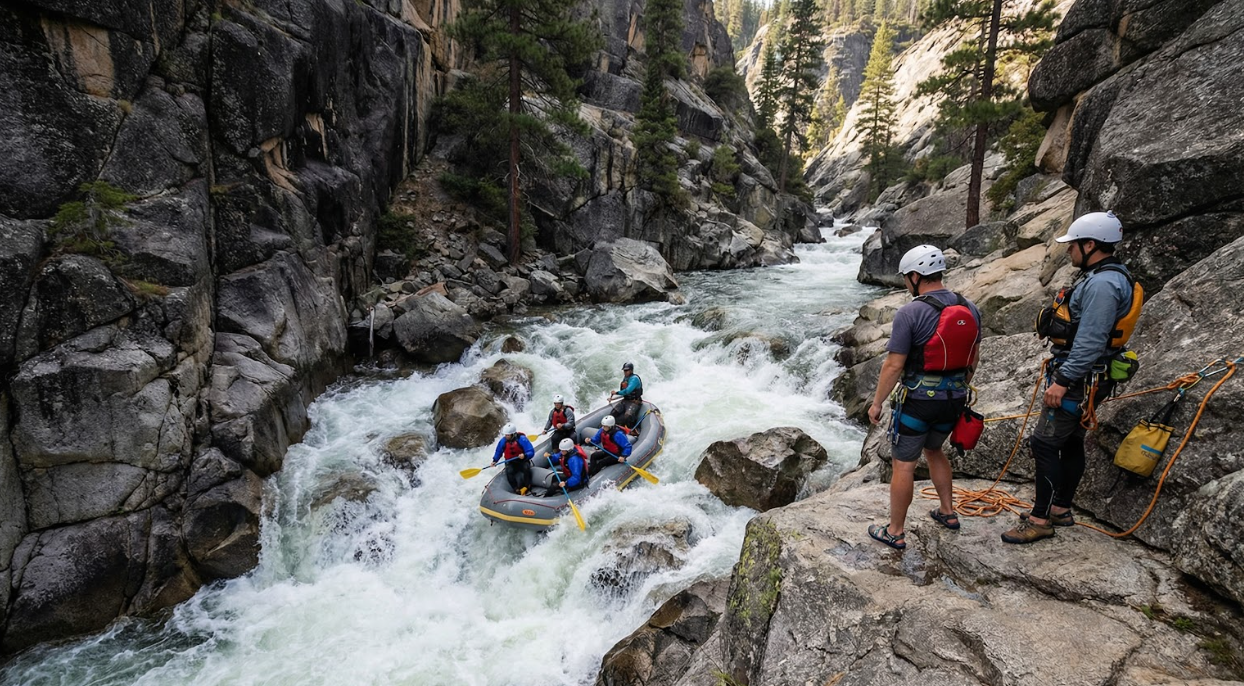
In Gore Canyon, tight granite walls, rope teams, and Class V moves turn commercial rafting into a true graduate exam.
Why it’s our capstone:
- Short and savage: eight rapids in nine miles, each with flip potential.
- Tight season: most outfitters open the permit gate from early August to mid-September, once spring runoff subsides.
- Skill bar: mandatory pre-trip swim test, prior Class IV experience, and comfort portaging on slick cliff ledges.
- Limited seats: only a handful of companies hold permits, and crews stay small to speed up rope-and-rappel boat moves at the put-in.
Moment-makers:
- Gore Rapid: boulder maze leading to a hungry hole
- Tunnel Falls: eight-foot vertical drop you scout from the rim
- Kirshbaum: chaotic curtain call that spits you into calm water and shaky high-fives
Gore Canyon isn’t everyone’s idea of fun, but if you’ve mastered Royal Gorge and The Numbers and still want more, this stretch shrinks those runs into warm-ups. Bring nerve, fitness, and respect; the canyon offers nothing less than a graduate exam in whitewater.
Quick-Glance Comparison Table
| River section | Typical class | Miles / time on water | Prime 2025 season | Nearest city (drive from Denver) |
| Royal Gorge (Arkansas) | IV; IV+ at peak runoff | About 10 mi / 2–3 h | May–Sept (dam-boosted flows) | Cañon City, 2 h |
| The Numbers (Arkansas) | Solid IV, technical | 5–7 mi / about 2 h | Late May–Aug (snowmelt + VFMP releases) | Buena Vista, 2 h 30 min |
| Upper Clear Creek | IV+ in early June | 5–7 mi / about 1 h 30 min | Early Jun–mid Jul (snowmelt only) | Idaho Springs, 45 min |
| Upper Animas | IV+ with V drops | 24 mi / 2–3 days | Late May–Jul (short window) | Silverton* |
| Gore Canyon (Colorado) | V at 900–1,200 cfs | 9 mi / about 3 h | Aug–Sept (post-runoff) | Kremmling, 2 h 30 min |
*Access via the Durango & Silverton Narrow Gauge Railroad.
Class ratings can rise or fall with water levels. Check real-time gauges and consult your outfitter before you commit.
Pro Safety Tips for Tackling Class IV Water
Class IV rapids reward bold paddlers but punish complacency. Follow the tactics below and you’ll finish the day exchanging high-fives, not incident reports.
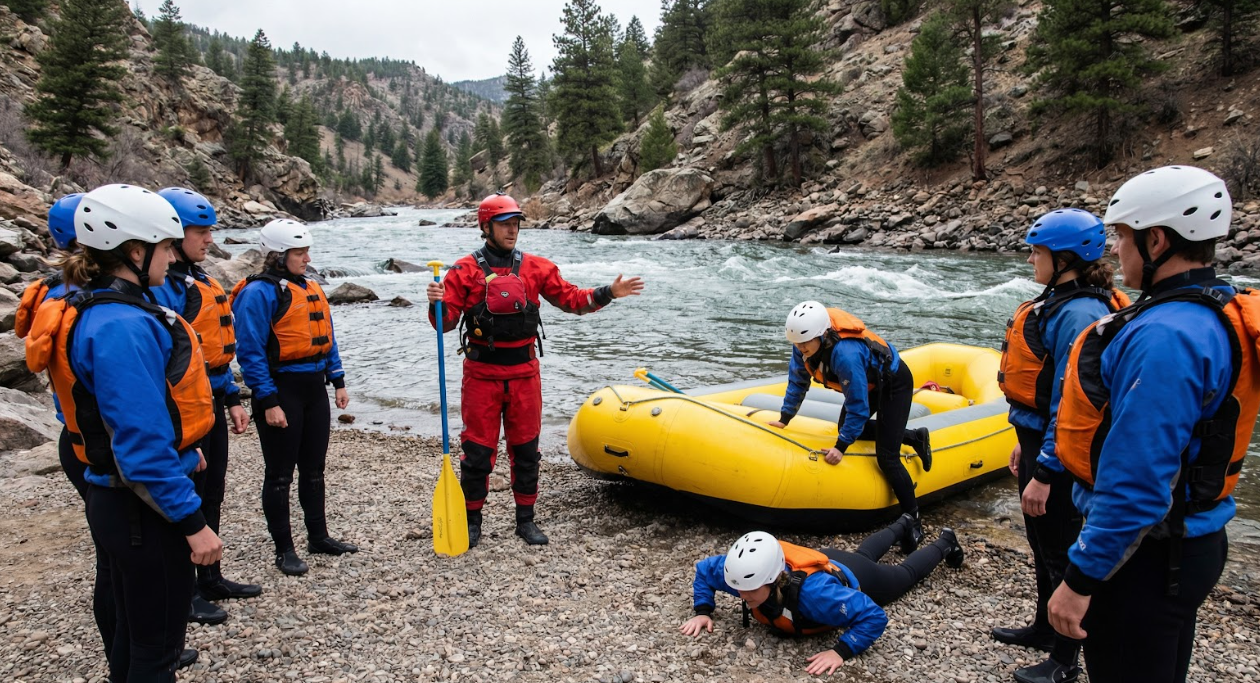
A thorough safety talk and on-land drills turn Class IV whitewater into a calculated adventure rather than a gamble.
- Vet your guide. Colorado requires lead guides on advanced sections to hold swift-water rescue certifications. Ask how many seasons they’ve rowed this stretch and listen for “four or more.” Experience matters when a spring rockslide redraws the line.
- Dress for the swim, not the sun. Early-June water on the Arkansas and Clear Creek often sits near 42 °F, cold enough to sap muscle strength in minutes. A full wetsuit or drysuit, neoprene booties, and a snug helmet beat any warmth on shore. Reputable outfitters include this gear in the trip price.
- Rehearse commands on dry land. “High-side” clicks only after you’ve scrambled to the high tube in a drill. Muscle memory built in the parking lot saves precious seconds in the rapid.
- Know the swimmer’s position. If you fall out, flip onto your back, keep toes downstream, and ferry-angle toward safety. Never stand up in moving water; foot entrapment can turn a minor swim into a major rescue.
- Respect the gauge. When flows climb beyond published thresholds (about 3,000 cfs for Royal Gorge and 1,200 cfs for Gore), Class IV turns into Class V. Check the USGS gauge the night before and ask your outfitter to confirm they’re within their operating window. Good companies cancel or reroute when levels drift outside the safe zone.
Conclusion
Treat these precautions as non-negotiable and Class IV becomes a calculated adventure, not roulette.
 David Natroshvili’s SPRIBE Leverages Strategic Partnerships to Bolster Innovation